
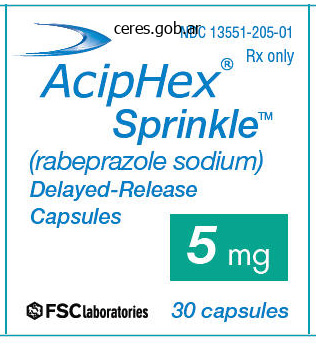
General Information about Aciphex
Aciphex, also recognized by its generic name Rabeprazole, is a medication commonly prescribed to deal with gastroesophageal reflux illness (GERD) and different situations involving excessive abdomen acid. This powerful drug belongs to a class of medications generally known as proton pump inhibitors (PPIs) which work by lowering the amount of acid produced by the abdomen.
As with any treatment, there are potential unwanted effects associated with taking Aciphex. These may embody headache, diarrhea, nausea, stomach pain, and dry mouth. In rare instances, more serious unwanted side effects such as extreme allergic reactions, liver problems, and low ranges of magnesium within the blood might occur. It is important to consult a physician if any of those unwanted effects happen.
Erosive esophagitis is one other condition that Aciphex can effectively deal with. This is a situation during which the lining of the esophagus becomes damaged due to the fixed exposure to stomach acid. The erosions or ulcers that form within the esophagus can lead to pain, issue swallowing, and bleeding. By reducing the quantity of abdomen acid, Aciphex promotes therapeutic of the broken esophagus and helps to prevent further problems.
One of the widespread causes of ulcers within the stomach and small gut is a bacterial infection called Helicobacter pylori. Aciphex, when taken in combination with antibiotics, can effectively eradicate this bacterial an infection and promote healing of the ulcers. This makes it a useful component within the treatment of peptic ulcers brought on by H. pylori infection.
In addition to GERD and erosive esophagitis, Aciphex can be used to treat Zollinger-Ellison syndrome, a rare situation in which tumors within the pancreas and duodenum cause the abdomen to provide excessive quantities of acid. This can result in severe peptic ulcers and other digestive issues. Aciphex works by inhibiting the manufacturing of abdomen acid in these circumstances, offering relief from signs and preventing additional damage to the digestive system.
Aciphex is effective in treating GERD by inhibiting the exercise of the proton pump, a protein within the stomach lining that is responsible for producing acid. By blocking this course of, Aciphex reduces the amount of acid within the stomach, offering relief from symptoms and permitting the esophagus to heal.
GERD is a persistent condition by which the abdomen acid and other stomach contents flow back into the esophagus, inflicting irritation and discomfort. This can result in symptoms such as heartburn, chest ache, issue swallowing, and a bitter taste in the mouth. If left untreated, GERD can lead to critical complications corresponding to esophageal ulcers, bleeding, and even esophageal cancer.
Aciphex is available in tablet kind and should be taken by mouth, often as soon as a day or as directed by a doctor. It is necessary to take Aciphex at the same time every day to maintain a constant stage of medicine in the body. The dosage and size of therapy will rely upon the individual’s condition and response to the medicine.
In conclusion, Aciphex is a extremely efficient treatment for the therapy of GERD, erosive esophagitis, Zollinger-Ellison syndrome, and ulcers caused by H. pylori infection. Its capacity to scale back abdomen acid manufacturing can provide relief from symptoms and promote healing of the esophagus and abdomen. However, it may be very important use this medication as directed by a physician and to focus on potential unwanted side effects. With the proper therapy plan, Aciphex might help individuals with these conditions stay a extra snug and healthier life.
Patients with chemotherapyinduced neutropenia may be infected with Pseudomonas aeruginosa, other gram-negative bacteria, and Aspergillus spp. Those with counts between 200 and 500 per mm3 are prone to infection with bacteria and M. Cough and dyspnea may be present, but respiratory symptoms may be minimal, with fever as the only finding. An etiologic agent can be suggested by certain extrapulmonary findings in conjunction with a specific immune defect. After organ transplant, patients can acquire infection that is related to hospitalization, the presence of serious illness, or transplant immunosuppression. Management usually involves empiric therapy based on risk factors for specific pathogens supplemented by diagnostic procedures (often bronchoscopy or open lung biopsy), especially in nonresponding patients. Chest pain, malaise, fatigue, and night sweats may also occur, and some patients are even asymptomatic. Upper lobe disease and pneumothorax were reported in the past, especially when patients were receiving aerosolized pentamidine for prophylaxis of P. After recovery from pneumonia, patients should receive chemoprophylaxis against recurrent infection, which can be done with oral trimethoprim/sulfamethoxazole or alternative agents. Actinomyces israelii is the usual cause of actinomycosis, although several other species can occasionally cause human disease. Clinical types of actinomycosis and their incidence include cervicofacial (55%), pulmonary (20%), abdominal (20%), and disseminated (5%). A hallmark of actinomycosis is the tendency to spread through anatomic barriers, including fascial planes, and the development of multiple sinus tracts.
Aciphex Dosage and Price
Aciphex 20mg
- 30 pills - $27.54
- 60 pills - $45.17
- 90 pills - $62.80
- 120 pills - $80.42
- 180 pills - $115.68
- 270 pills - $168.56
- 360 pills - $221.44
Aciphex 10mg
- 60 pills - $41.08
- 90 pills - $53.24
- 120 pills - $65.40
- 180 pills - $89.72
- 270 pills - $126.20
- 360 pills - $162.68
