
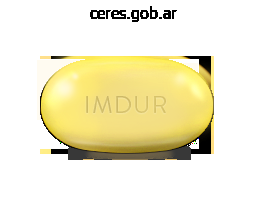
General Information about Imdur
Imdur, additionally recognized by its generic name isosorbide mononitrate, is a commonly used peripheral vasodilator treatment. This kind of medicine works by dilating the blood vessels, permitting for increased blood circulate and reducing the workload on the guts.
It is necessary to notice that Imdur is commonly used as part of a combination therapy approach. This means that it's sometimes prescribed alongside other drugs, similar to beta-blockers or calcium channel blockers, to successfully manage a patient's situation. The combined results of these drugs may help to achieve better management of blood stress and improved blood flow.
One distinctive facet of Imdur is its predominant impact on venous vessels. While some vasodilators primarily have an result on the arterial vessels, Imdur has a stronger impact on the veins. This means that it primarily reduces the quantity of blood returning to the heart, quite than dilating the arteries that carry blood away from the center.
Like all drugs, Imdur could trigger side effects. The most typical unwanted facet effects embrace dizziness, headache, and flushing of the skin. These results are often delicate and subside with continued use. However, if they turn out to be extreme or persistent, sufferers ought to consult their physician.
Imdur is on the market in different forms, including tablets and extended-release capsules. The recommended dosage and frequency of administration will differ relying on the situation being treated and the individual patient's needs. It is essential for patients to carefully comply with their physician's instructions and to report any unwanted effects or concerns to their healthcare supplier.
In addition to its use in CHF, Imdur can be used to treat hypertension (high blood pressure) in the 'small' circulation. This refers again to the circulation of blood between the center and the lungs. In circumstances such as pulmonary hypertension, the blood vessels on this space can turn into constricted, resulting in increased stress on the best side of the center. By acting totally on the veins, Imdur can help scale back this strain and enhance blood flow between the heart and lungs.
Imdur is also used in the treatment of sure vascular conditions, similar to obliterating endarteritis and angiospastic retinitis. These situations are characterized by spasms in the peripheral arteries, which might lead to reduced blood circulate and tissue injury. By dilating the veins, Imdur might help to counteract these spasms and improve blood move to the affected areas.
In conclusion, Imdur is a peripheral vasodilator with a predominant effect on venous vessels. It is used to forestall angina in CHF, treat hypertension in the 'small' circulation, and counteract spasms in peripheral arteries. It is an important medicine in the administration of varied cardiovascular conditions and is usually prescribed together with other medications for optimum outcomes. As with any medicine, sufferers should observe their doctor's instructions, monitor for any unwanted aspect effects, and report any issues to their healthcare supplier.
Imdur is mostly prescribed for the prevention of angina in sufferers with congestive heart failure (CHF). Angina is a sort of chest pain or discomfort that happens when the heart muscle does not receive sufficient blood and oxygen. CHF is a condition during which the center is unable to pump enough blood to meet the physique's needs. By dilating the veins, Imdur reduces the amount of blood that returns to the heart, lowering the workload on the heart and serving to to prevent episodes of angina.
Approximately 85% of asymptomatic patients are cured with one course of paromomycin, and, because it is nonabsorbable and has moderate activity against trophozoites that have invaded the colonic mucosa, it also might be useful for single-drug treatment of mild invasive disease during pregnancy. Metronidazole and tinidazole are believed to be less effective against organisms in the colonic lumen, and subsequent treatment with a luminal agent such as paromomycin is recommended to prevent recurrent disease. Most patients with amebic colitis respond promptly with resolution of diarrhea in 2 to 5 days. Despite conflicting reports on the safety of the nitroimidazoles for the developing fetus during pregnancy, women with severe disease during pregnancy should probably be treated without delay. As discussed in Chapter 84, metronidazole (750 mg 3 times a day for 10 days) followed by a luminal agent is also the treatment of choice for amebic liver abscess. Water can be made safe for drinking and food preparation by boiling it for one minute, by halogenation (with chlorine or iodine), or by filtration. The importance of safe drinking water is highlighted by an outbreak of amebiasis in Tbilisi, Republic of Georgia, where there was a water-borne epidemic due to decay of the water treatment facilities following the demise of the Soviet Union. Naturally acquired immunity to intestinal amebiasis provides short-lived protection against reinfection, giving hope that a vaccine may be feasible. Dientamoeba fragilis (discussed in the following section), previously thought to be an ameba, is more closely related to the flagellated protozoan Trichomonas vaginalis than to the true amebae. It has been suggested that several distinct uninucleated cystproducing Entamoeba species can infect humans, and it has been proposed that these organisms collectively be termed "E. Good clinical responses to metronidazole and diloxanide furoate have been reported. A, High-power view of a duodenal biopsy specimen showing many trophozoites near the surface of the epithelium between villi.
Imdur Dosage and Price
Imdur 40mg
- 30 pills - $32.29
- 60 pills - $51.39
- 90 pills - $69.49
- 90 pills - $69.59
- 120 pills - $88.69
- 240 pills - $165.89
Imdur 20mg
- 30 pills - $32.99
- 60 pills - $53.99
- 90 pills - $69.99
- 120 pills - $83.99
- 180 pills - $111.99
- 360 pills - $197.99
